Signs That The Excel Threshold Has Been Exceeded
when Excel is no longer enough
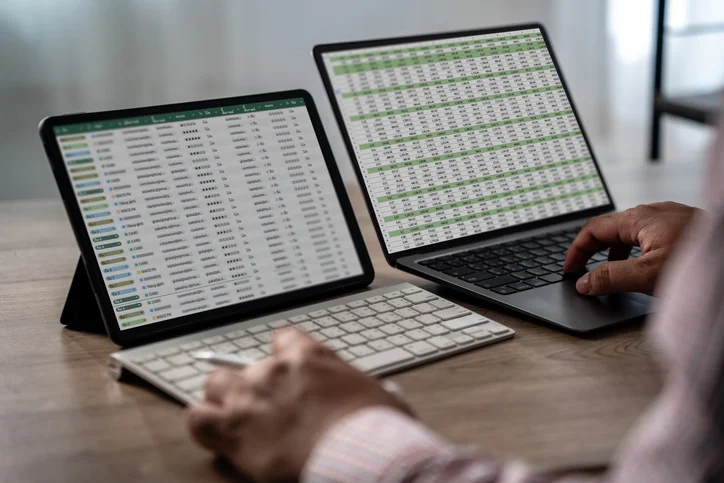
Many organisations have been run from Excel spreadsheets for years. According to our Accounting Transformation report, 67% of finance decision-makers primarily use Excel for account analysis and justification.
Its appeal lies in its flexibility. Everyone already knows how to use it, and more importantly, how to adapt it to their needs. As the organisation grows, Excel use grows with it, as everyone already knows how to use it, and its limitations. The problems do not come with the tool itself, but with how it is used when the scope expands. At some point this electronic spreadsheet becomes the system you’re basing major financial decisions on. It’s embedded in the organisations, but it’s not up to the job on its own.
The pressure from this set-up is absorbed by the finance team. It usually happens during the closing process, where it is most intense. According to the Observatory, 38% cite the multiplicity of Excel files as one of the principal factors complicating their financial close. As one respondent said:
“Every audit is the same story. We have to gather supporting documents from everywhere.”
So how can you spot when Excel is not enough? And what can you do about it?
We’ve identified several indicators that show Excel is no longer sufficient for account analysis and justification.
- Your organisation is a multi-entity environment with many different practices across its subsidiaries.
- You have geographically distributed teams or environments with high staff turnover.
- You experience repeated back-and-forth between ERP systems making manual data extraction time-consuming.
- Your requirements for traceability have gone up (statutory audits, internal audits, tax audits).
- Your monthly close is performed under severe deadline pressure. In our study, 96% said closing deadlines were a source of pressure for their team.
- Your data volumes crack the files.
- The complexity of your Excel files is no longer supported. For example the number of sheets or dynamic macros.
As an organisation expands, its systems stretch. It needs to accommodate new entities and different working practices. These can be geographically remote from each other and staff exits can have a disproportionate effect. New entities can also lead to multiple ERP systems that generate repeated back-and-forth, rather than streamlined services. As a result, traceability demands rise. This in turn puts pressure on the finance team, particularly during regular closing processes.
For example, more entities means different practices. When an organisation expands or acquires into a new region, it may end up with a subsidiary that has developed its own review file according to its habits, formats and levels of rigor. At Group level, the finance team has to consolidate these differing processes, without necessarily having a clear understanding of what has been done, how and by whom.
This means the finance team is grappling with ongoing challenges. There’s no assurance of consistency, it’s much harder to manage the process and there’s no guarantee that the review practices comply with the expected standards. This has now become a governance issue.
As one Group Accounting Director said to us:
“Auditors reported to the Audit Committee that the quality of the closing process varied significantly from one subsidiary to another.”
Staff turnover can also impact the closing process. When the person,who knows where the correct file is, has left or is absent, the review process becomes unstable. According to our research, 35% of executives cite dependence on key individuals as one of the principal factors complicating their financial close. Another respondent to our survey said:
“We built a homemade Excel workbook for the close, but it is heavy, unstable, and the person who created the macros has left the company.”
Traceability is harder in Excel. Documentation linked to each account is structurally fragmented. Finance teams end up trying to monitor or gather:
- Supporting documents in email inboxes.
- Analytical comments stored in separate files.
- Review notes hastily renamed on shared drives.
- Finding the justification for a balance closed three months earlier can sometimes resemble an investigation.
So what can organisations do to alleviate this reliance on Excel?
We recommend supporting it with specialised software. Software dedicated to the analysis, justification, and documentation of financial closes does not replace Excel entirely. Rather, it handles what Excel cannot structure effectively.
Specifically, it provides:
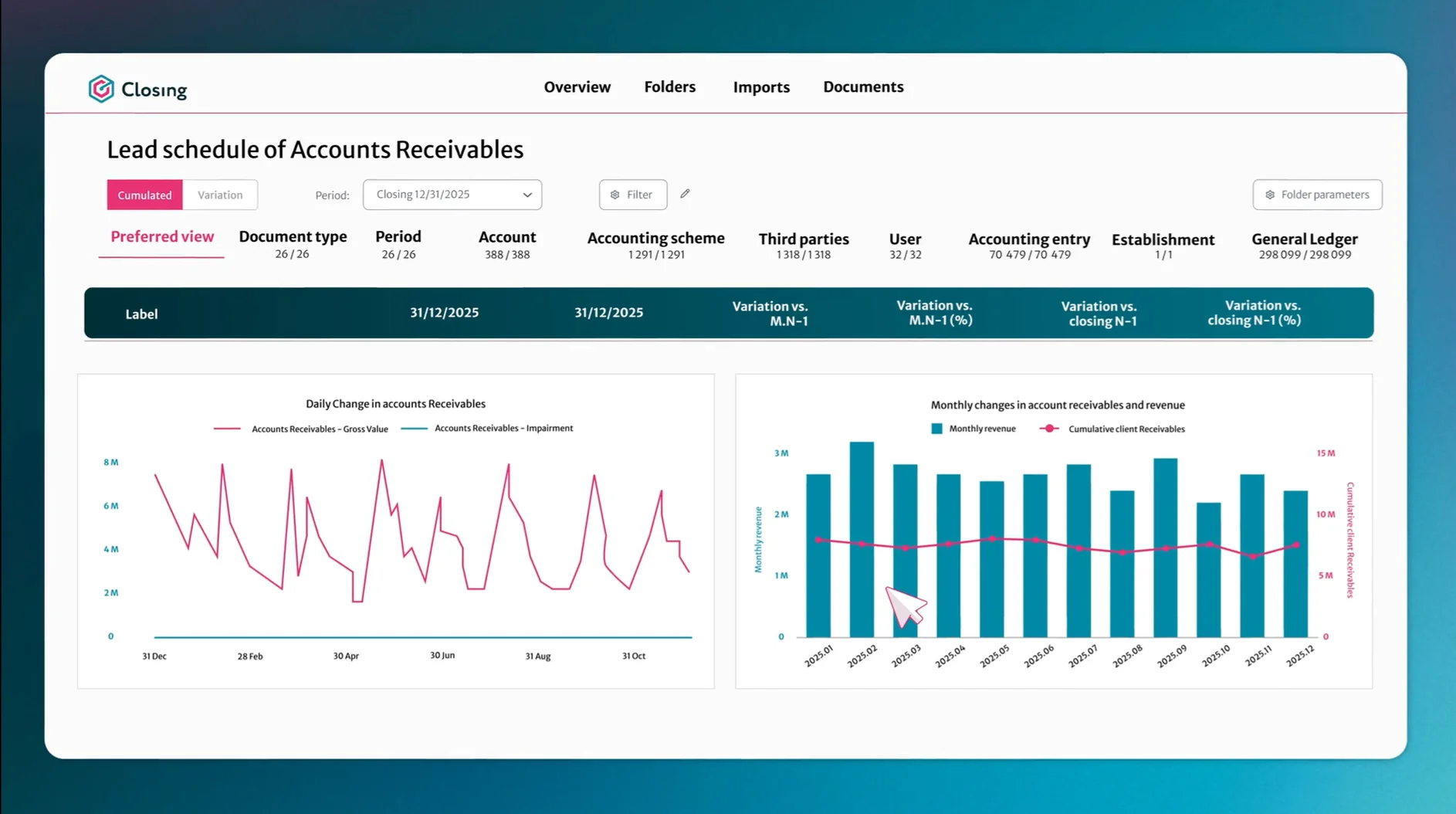
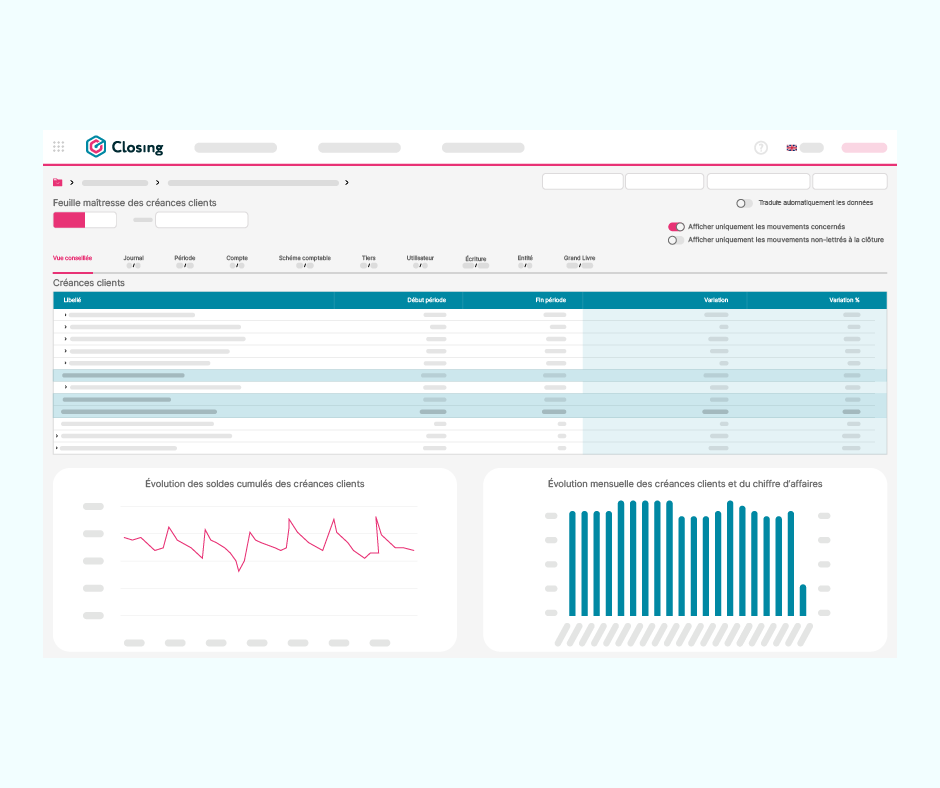
- Comprehensive visibility: direct access from the general view (account balances) down to the detailed level (the journal entries composing those balances), without requiring ERP queries for every single analysis.
- Structured validation workflow: each account has a clearly defined status (to be reviewed, in progress, validated), visible centrally across all entities simultaneously.
- Native documentation centralisation: supporting documents, analytical comments, and review notes are all attached to the relevant account, time-stamped, assigned, and immediately accessible to any stakeholder.
- Standardised practices: the review programme is deployed consistently across all subsidiaries, with effective control at group level over what is done, how it is done, and by whom.
- Automatic anomaly detection: identification of unusual or sensitive entries without manually reviewing thousands of transaction lines.
- Native audit trail: every action, validation, and comment is tracked—meaning the question “who did what, when, and on what basis?” always has an answer.
Excel will not be replaced by specialist systems. It remains an important part of the finance team’s toolkit. But augmenting it with dedicated software eases the pressure on your team and, more importantly, makes your numbers useful for decision-making.
If you want to go further, we set out what that reliance really costs in the hidden cost of Excel in the financial close, and why finance leaders are moving the close beyond Excel toward automation.
If you think your Excel threshold has been exceeded, we can help.
About the author:
François Vallana, CEO
François Vallana joined Sixthfin in 2026 as Chief Executive Officer, bringing extensive experience in scaling high-growth software, data and B2B platform businesses. He notably contributed to the rise of Enablon, acquired by Wolters Kluwer, before leading Vecteur Plus. His background spans technology, domain expertise and general management. François is driven by one ambition: turning Sixthfin’s technological edge into an essential market standard for finance, control and audit teams.
Published on 19.10.2026