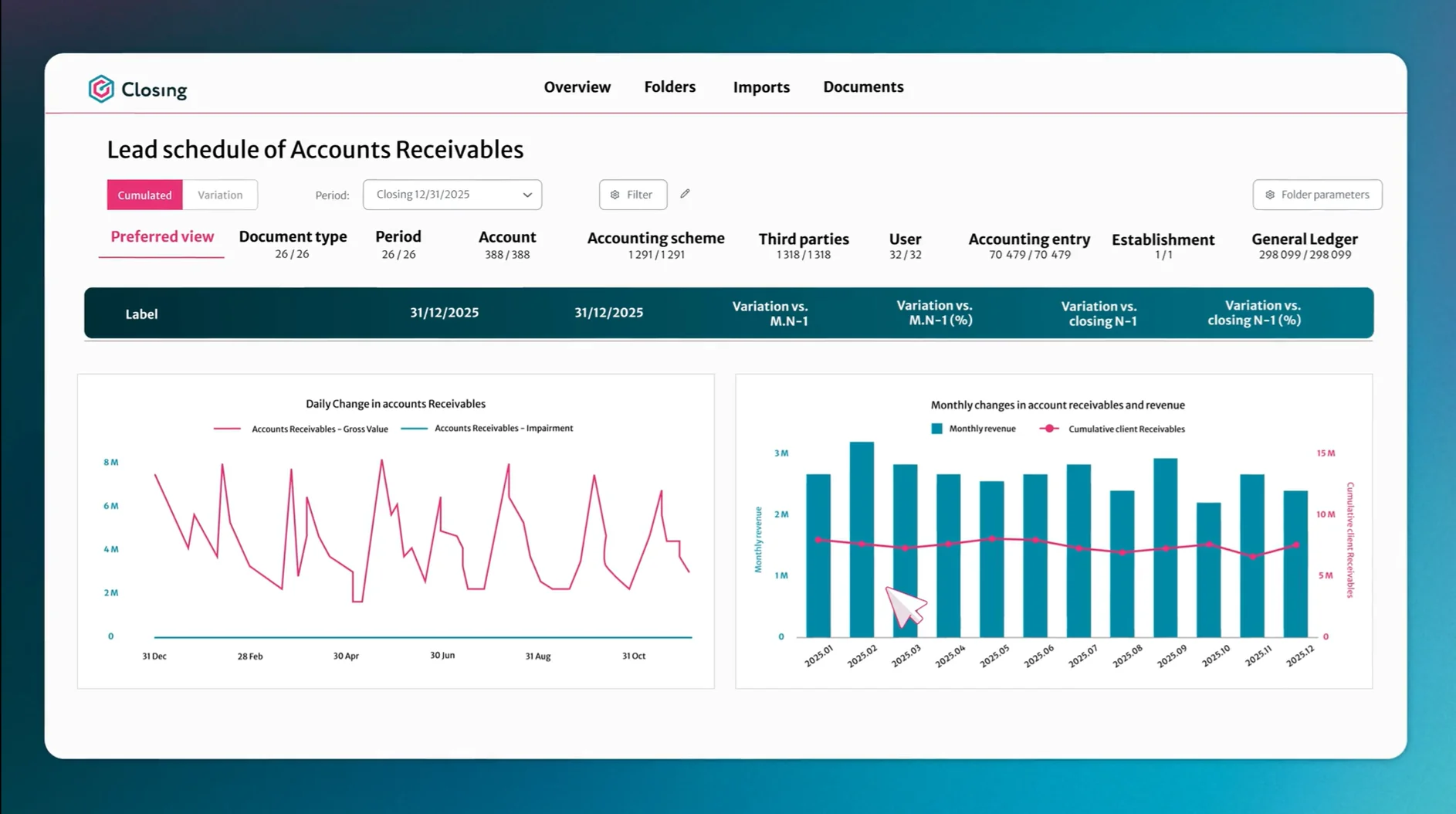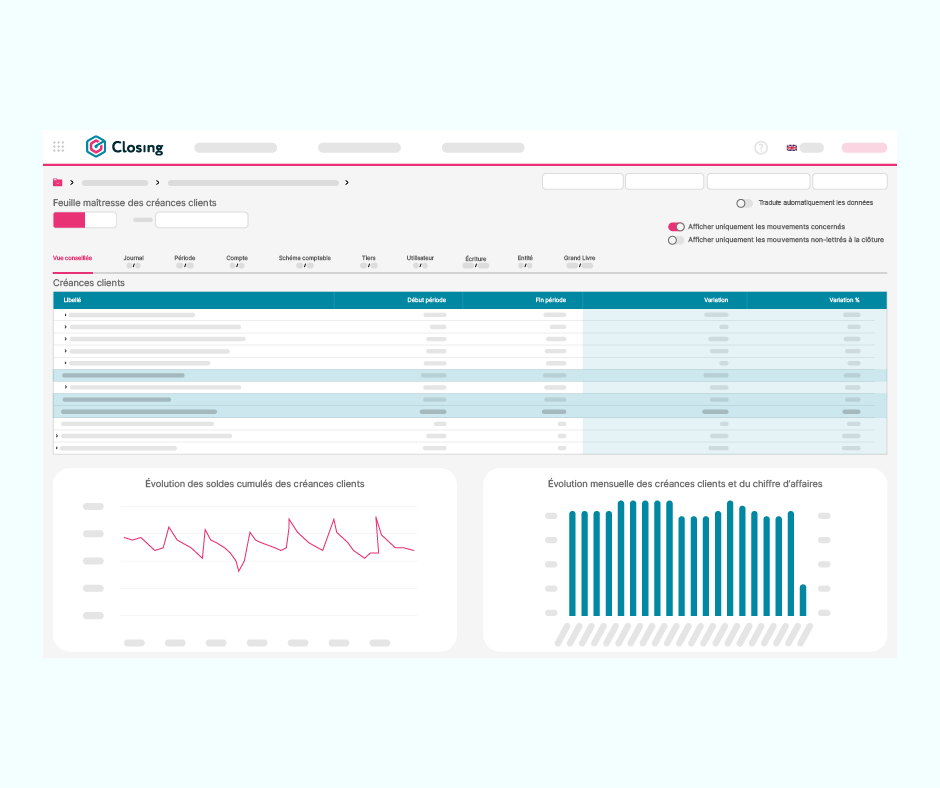
A financial closing solution that enhances reliability and speeds up your closing controls
Say goodbye to manual approaches and simplify your accounting reconciliations. Centralise data from your various ERP systems, standardise processes, and structure your workflows.
The result? A seamless and optimised closing process, aligned teams, and shorter timelines.
Structure, Secure, and Speed Up Your Period‑End Closing Controls
-
Eliminate Inefficiencies

-
Improve Data Security
-
Accelerate Accounting Audits
-
Unify Process Management
Structure Your Work, Eliminate Inefficiencies, and Regain Control of Your Closing Processes
Streamline your financial closings with centralised, seamless, and expertly managed processes. Achieve greater efficiency and accuracy:
- Gain control by accessing the extent of your data avoiding repetitive back-and-forths between spreadsheets and ERP systems
- Standardise your goals as well as your control programmes
- Harmonise closing procedures between the group and its subsidiaries
- Centralise all review activities and documentation to ensure full traceability
- Monitor and manage your closing process in real-time
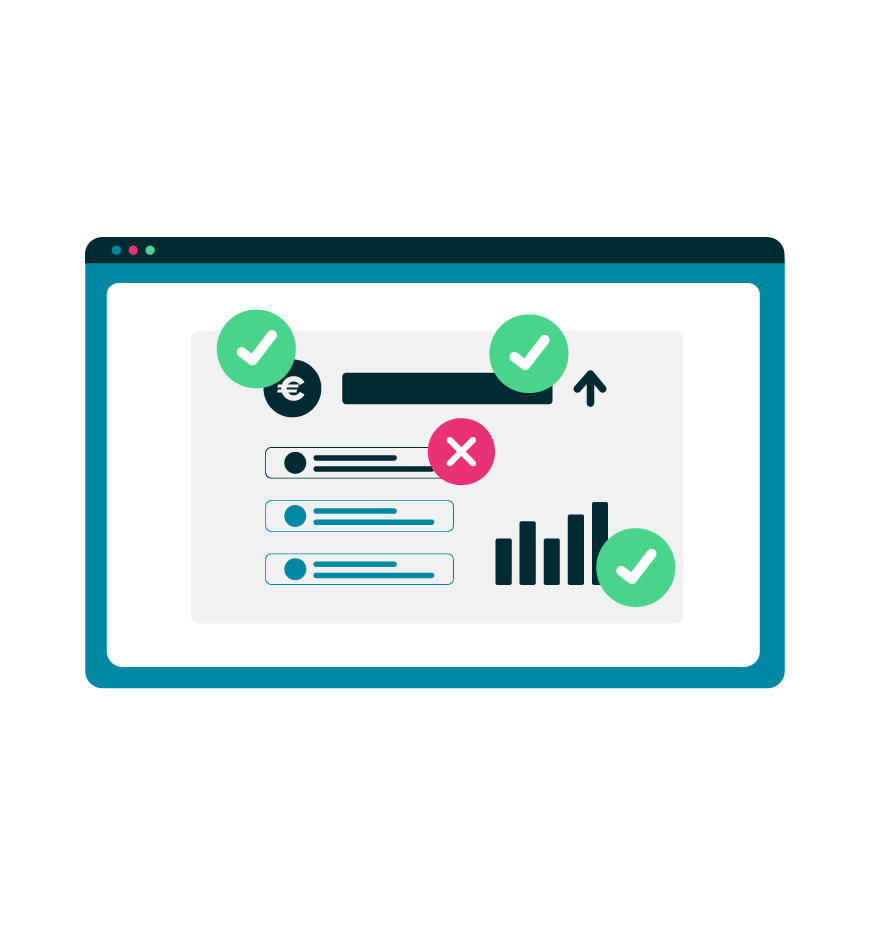
Strengthen the Security of Your Accounting Data and Reduce Your Financial Risk Exposure
Identify critical entries and strenghten controls with AI-enhanced analyses for reliable and secure data:
- Integrate and harmonise general ledger data, regardless of ERP systems, currencies, or accounting frameworks
- Thanks to AI, optimise your controls with automated analyses: lead schedule, analytical reviews, reconciliations, account balance justifications, and detection of atypicals

Accelerate Your Analyses and Streamline Your Accounting Review Processes
Enjoy predictable and perfectly managed closing processes with optimised deadlines and data management:
- Fully customise workflows with an adaptable core model
- Explore your data thoroughly with integrated drill-down capabilities right down to supporting documents. Everything is in one place
- Access a clear and optimized account reconciliation process, providing a structured view to simplify and streamline your teams’ work
- Capitalise on preceding periods and benefit from previous workflows and analyses
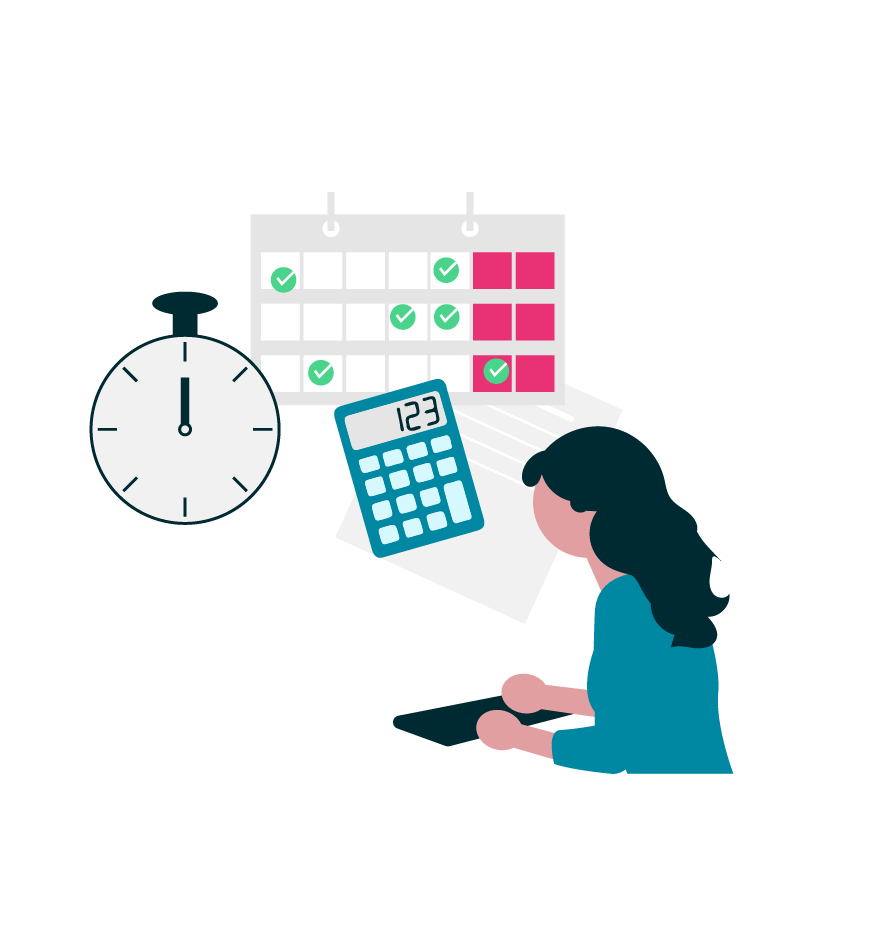
Unify Process Management
Bring consistency and fluidity to your closing processes with a centralised platform and collaborative workflows:
- Store, centralise, and archive your work along with supporting documents
- Enhance collaboration by tracking progress across all levels of the group
- Speed up your balance sheet review with intuitive and immersive navigation into your data down to individual transactions, while adding comments and annotations for optimal tracking.
- Benefit from real-time visibility into bottlenecks and remaining tasks
- Plan controls precisely and adjust closing schedules for each period

Designed for seamless integration.
A clear platform, easy to adopt, tailored to your organisation, your teams, and your priorities.
Your Frequently Asked Questions About
The Acceleration Of Period‑End Reviews And Controls
1 How to guarantee the reliability of accounts without excessive reliance on manual adjustments?
The reliability of accounts depends above all on the quality and consistency of source data. As long as closing controls rely on manual extractions and spreadsheets, the risk of error remains structural. The challenge is to centralise ledger data and automate recurring controls so that reliability no longer depends on individual vigilance but on a systematised process that works the same way at every closing.
2 Where do the risks really lie in the closing process?
The risks are concentrated in manual Journal Entries made at the last minute, persistent anomalies (old unallocated entries), and unexplained balance variations. They are often invisible as long as the analysis remains superficial. A structured analytical review, combined with automatic detection of anomalies, makes it possible to locate them precisely rather than discovering them late in the audit process.
3 How can you obtain a complete, traceable and centralised audit trail?
A usable audit trail must be time-stamped and linked to specific accounts without manual reconstruction. Most organisations “reconstruct” their trail after the fact. This weakens your position during an audit and creates a massive workload. Digital centralisation ensures you are “Audit-Ready”.
4 How can you make access to account reconciliations and supporting documents more reliable and easier?
Balance justifications are often the weak link in the closing process: scattered files, unsynchronised updates, attachments that are difficult to find. To be truly reliable, justifications must be structured, linked directly to the general ledger data and accessible at any time, not just reconstructed in a hurry for the audit.
5 How to identify internal control failures that could create a group risk?
This risk is often underestimated because subsidiaries report data without the group being able to verify the quality of the underlying controls. Identifying entities at risk requires monitoring the execution of controls by subsidiary, not just consolidated balances. True visibility comes from seeing the work performed, not just the final numbers on the reporting package.
6 How to reduce time spent on data handling to focus on analysis?
In most finance departments, a significant portion of closing time is spent on data handling tasks (multi-ERP extractions, manual reconciliations, formatting, macros, etc.) before analysis can even begin. Limiting these reprocessings requires automating repetitive, low-value-added tasks and centralising data in an environment ready for analysis. By freeing up this time, your experts can focus on professional judgment: interpreting variations, reviewing sensitive accounts, and partnering with operational managers.